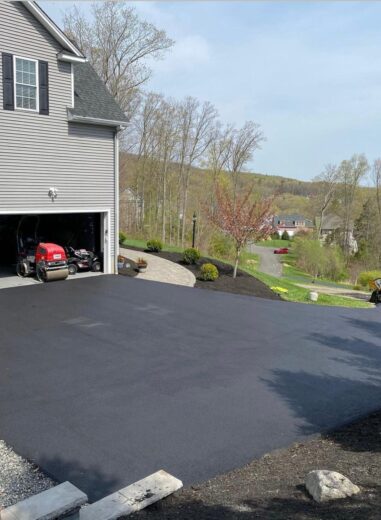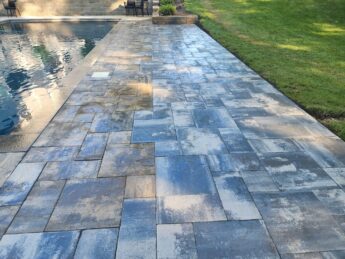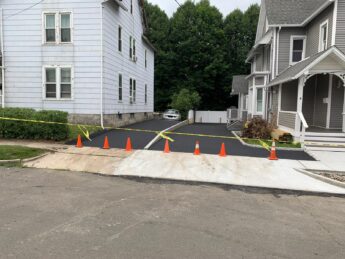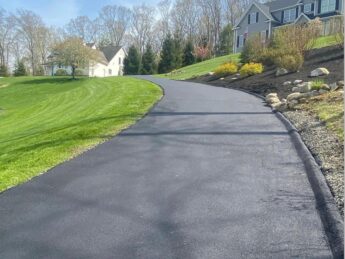
Leo Brothers Contracting handles driveway resurfacing in Newtown, CT, laying a fresh asphalt layer over a sound base. The company works from 5 Jansen St in Danbury, brings more than 20 years of paving experience, holds Connecticut license HIC.0663836, and carries a 4.8 Google rating. Resurfacing costs far less than replacement. However, it only suits some driveways.
When Does Driveway Resurfacing Newtown Properties Make Sense?
The base decides everything. Specifically, resurfacing works when the surface has worn out but the gravel beneath still supports weight evenly. Consequently, straight cracks, faded colour, and general roughness all point toward resurfacing. However, sinking areas and soft spots point toward a full rebuild instead.
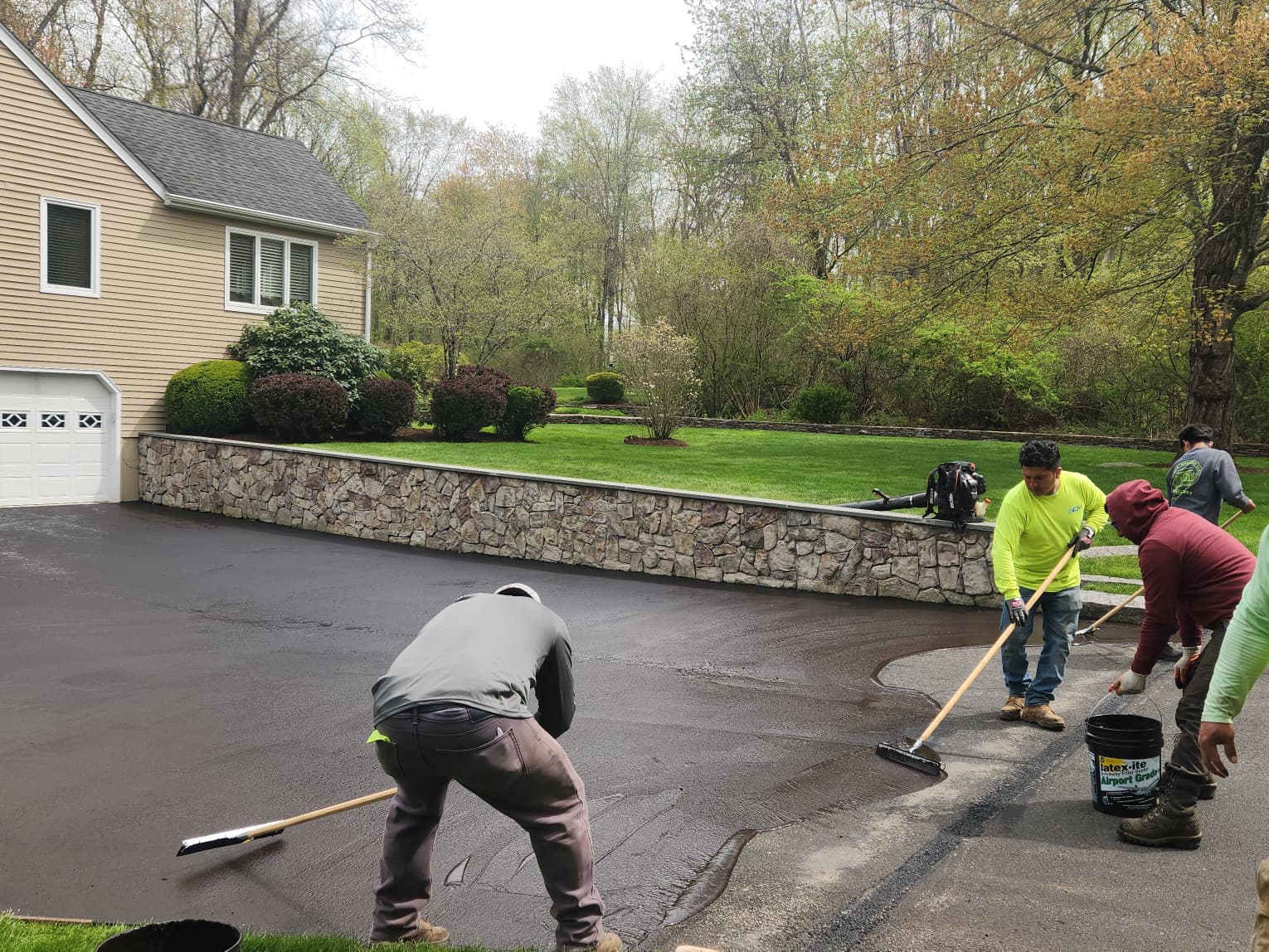
How Does the Work Proceed?
Four stages cover a typical job. First, we clean the surface and remove all vegetation and debris. Then we fill cracks and repair failed patches. Next, we correct pitch where water has been sitting. Finally, we lay and roll the new asphalt layer to a uniform depth.
Why Do Newtown Driveways Wear Out Early?
Terrain and winter combine here. Specifically, the long steep drives off Hattertown and Sandy Hook roads shed heavy runoff that refreezes nightly through February. As a result, surfaces ravel faster than they do on flat lots. Additionally, plough blades scour the top layer every season.
Comparing Driveway Resurfacing Newtown Costs Against Replacement
Weigh both honestly before deciding. Our Newtown replacement guide covers the full rebuild, and our Newtown repair guide covers smaller fixes. Furthermore, our Newtown sealcoating guide explains protection, and the Danbury asphalt paving page details our methods.
Get a Free Resurfacing Quote
We probe the base, measure the area, and price both paths in writing. Meanwhile, our Newtown paving page lists the full service. Alternatively, for wider site work, our partners at Leo Brothers Development can help.
Call (203) 442-7341 for a free estimate.
Resurfacing Questions From Newtown Homeowners
Crews lay a fresh layer of asphalt over the existing surface after cleaning and repairing it. Consequently, the driveway looks and drives like new without a full excavation. However, the method only works when the base beneath remains sound.
Look at the crack pattern. Specifically, straight surface cracks and general wear mean the base holds. However, alligator cracking, sinking areas, and soft spots underfoot mean the base has failed and resurfacing would simply sink with it.
Resurfacing commonly runs roughly half to two thirds of full replacement. Specifically, you save the excavation, disposal, and new base material. Therefore, we price both options so the comparison stays clear.
Expect roughly 10 to 15 years with sealing. However, that figure assumes the base underneath stays stable and drainage works properly. Consequently, we correct pitch problems during the job rather than paving over them.